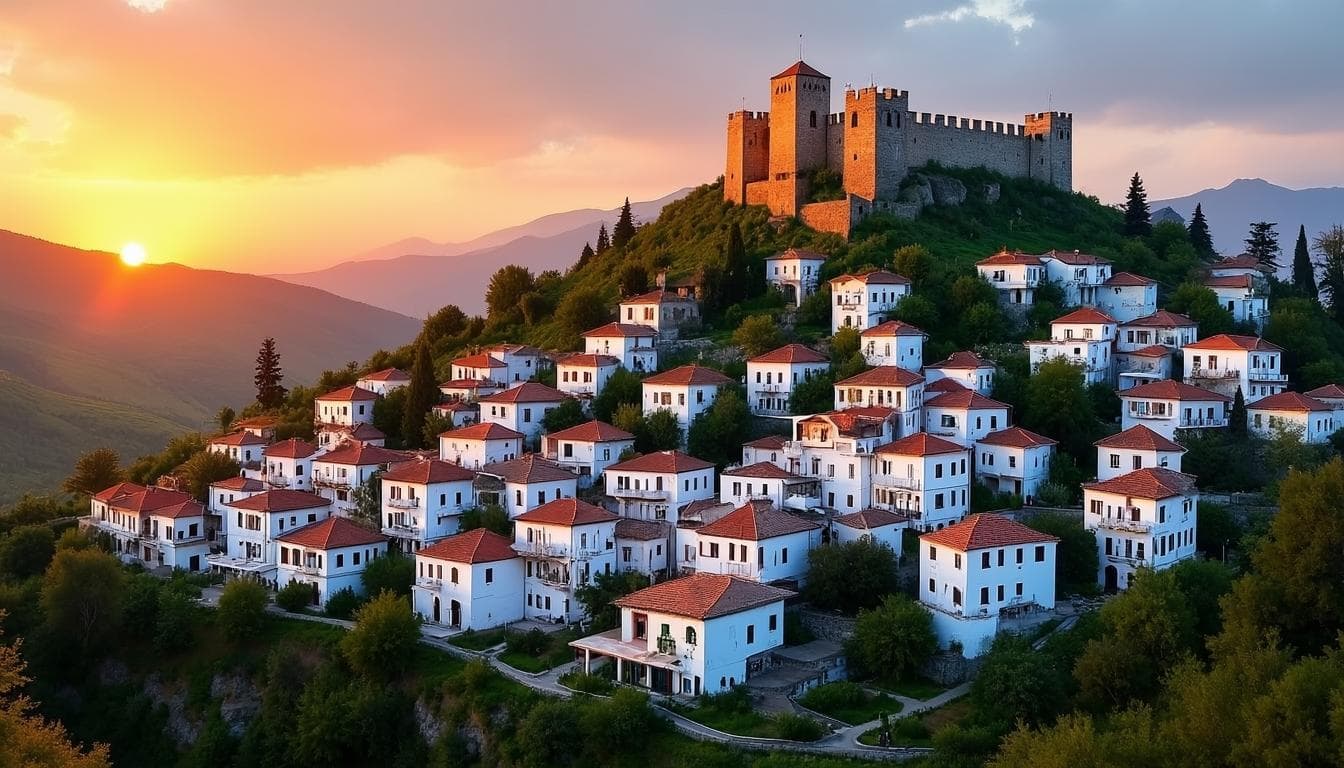
Most visitors to Berat come for the famous photograph — rows of white Ottoman houses climbing the hillside, their windows glowing at sunset like a thousand lanterns. It's one of Albania's most iconic images, and it's well deserved. But if you only stop for the photo, you'll miss what makes Berat truly extraordinary: a city where 2,400 years of history isn't preserved behind glass — it's alive, breathing, and waiting to be experienced.
This is your guide to going deeper into Berat, beyond the windows and into the soul of Albania's most enchanting city.
Morning: The Citadel and Its Secrets
Start early — before the tour groups arrive — and head straight to the Kalaja, Berat's ancient hilltop fortress. Unlike most European castles, this one is still inhabited. Around 30 families live within its walls, tending gardens and hanging laundry between ancient stone arches. It feels less like a museum and more like stepping into another century.
Inside the citadel, don't miss the Church of Santa Maria Blaherna, a tiny 13th-century chapel with faded frescoes that rival anything you'll find in Ravenna. The Onufri Museum, housed in the Church of the Dormition of St Mary, displays the works of the 16th-century master painter Onufri, whose radical use of red pigment — a secret formula still not fully understood — makes his icons instantly recognizable.
Walk along the fortress walls for panoramic views that stretch across the Osum River valley to Mount Tomorr, Albania's sacred mountain. On a clear morning, the light here is almost spiritual.
Midday: The Three Quarters
Berat is traditionally divided into three neighborhoods, each with its own character:
Kala (The Fortress Quarter)
The oldest part, perched on the hill. Stone paths wind between churches, mosques, and homes. The Red Mosque, dating from the 15th century, stands as a reminder of Berat's Ottoman period — its minaret was destroyed by lightning but the prayer hall remains.
Mangalem (The Muslim Quarter)
This is the postcard Berat — the cascading houses that create the famous "city of windows" effect. But look closer: carved wooden doors hide courtyards with ancient wells, stone staircases lead to rooftop terraces, and the Helveti Tekke (a Sufi prayer house) contains a beautifully carved wooden ceiling that few tourists ever see.
Gorica (The Christian Quarter)
Across the river, Gorica is quieter and often overlooked. Walk the cobblestone streets to find the Church of St. Spyridon, then continue to the Gorica Bridge — a Ottoman-era stone bridge that offers the classic view back toward Mangalem. This is where photographers set up for the iconic sunset shot.
Afternoon: Wine, Raki, and the Art of Slow Living
Berat sits in one of Albania's oldest wine-growing regions. The hills around the city have produced wine for over 3,000 years, since Illyrian times. Today, a new generation of winemakers is reviving traditional varieties alongside international grapes.
Visit a local wine cellar (kantinë) for a tasting. The Berat region is known for its Puls grape, an ancient white variety that produces crisp, mineral-driven wines unlike anything else in the Mediterranean. Many cellars also produce raki — Albania's beloved grape brandy — aged in oak barrels for years.
For something truly unique, seek out one of Berat's artisan workshops. Woodcarvers, copper smiths, and embroidery artists still practice traditional crafts in small workshops throughout the old town. These are not demonstrations for tourists — they're real working artisans, and many are happy to share their stories over a glass of Turkish coffee.
Evening: The Golden Hour
As the sun drops toward the horizon, Berat puts on its famous show. The white Ottoman houses glow amber, then gold, then deep orange. The windows — those thousand windows — reflect the dying light until the entire hillside seems to be on fire.
Find a rooftop restaurant in Mangalem, order tavë kosi (baked lamb with yogurt — a dish that originated in nearby Elbasan but is perfected in Berat), and watch the spectacle unfold. Pair it with a glass of local wine and you'll understand why people don't just visit Berat — they fall in love with it.
Where to Stay
The best way to experience Berat is to sleep within its historic walls. Many Ottoman houses have been converted into boutique guesthouses, offering rooms with original stone walls, carved wooden ceilings, and views over the valley. Prices are remarkably affordable — a beautiful room in a heritage building can be found for €25-50 per night.
For a truly special experience, book a room inside the citadel itself. Waking up inside a 2,400-year-old fortress, with the morning light streaming through Ottoman windows, is something you'll never forget.
Practical Tips
- Getting there: 2-hour drive from Tirana; buses run regularly from Tirana bus station
- Duration: Stay at least one night — two is better. Berat rewards slow exploration
- Best time: Spring (April-May) and autumn (September-October) for perfect weather and fewer crowds
- Don't miss: The Onufri Museum, sunset from Gorica Bridge, a wine tasting, and walking the citadel walls
- Budget: Berat is very affordable — expect €30-60/day including accommodation and meals
- Tip: Hire a local guide for the citadel — they'll unlock churches and stories you'd never find on your own
Why Berat Matters
In a world of overtouristed destinations, Berat is a rare thing: a UNESCO World Heritage Site that still feels authentic. The people who live here aren't performing for tourists — they're going about their lives in a place where every stone has a story. The old man sweeping his courtyard in the citadel isn't a prop. The woman hanging laundry from her Ottoman window isn't a photo opportunity. They're the real Berat.
And that's what makes this city so powerful. It doesn't need to put on a show. It simply is — beautiful, historic, welcoming, and utterly genuine. In 2026, as more travelers discover Albania, Berat will be on everyone's list. Come now, while it still feels like a secret shared among friends.
Ready to explore Berat? Browse our curated experiences in Central Albania — from guided walking tours of Berat's historic quarters to wine tastings and cooking classes with local families.